
The global demand for registered midwives has created unprecedented career opportunities, particularly in the Gulf Cooperation Council (GCC) countries where Western-trained professionals can earn 2-3 times their domestic net income through tax-free packages.
The UK currently faces a shortage of 2,500 full-time midwives, while Canada projects strong shortage risks through 2033. Meanwhile, Saudi Arabia’s Vision 2030 aims to recruit 175,000 healthcare professionals by 2030, creating exceptional opportunities for internationally qualified midwives.
Understanding what defines a registered midwife, the registration requirements across major Western countries, and the lucrative GCC licensing pathways can position your midwifery career for significant financial and professional advancement.
What Is a Registered Midwife?

A registered midwife is an autonomous healthcare professional who completed ICM-accredited education and holds legal registration to provide pregnancy, labor, delivery, and postnatal care.
The International Confederation of Midwives (ICM) establishes the global standard for midwifery practice. A registered midwife is defined as a person who has completed a midwifery education programme based on ICM Essential Competencies, acquired requisite qualifications for registration, and demonstrates competency in the midwifery scope of practice.
Registered midwives work autonomously as responsible and accountable professionals. The ICM 2024 framework expanded to 37 competencies across five categories, with minimum 50% of educational time dedicated to clinical practice. This differs significantly from certified nurse-midwives who hold nursing licenses before midwifery training, and certified professional midwives who focus on out-of-hospital births.
The midwifery scope of practice encompasses pregnancy care, labour and delivery management conducted on the midwife’s own responsibility, postnatal care for mother and newborn, and detecting complications requiring medical intervention. This autonomous practice authority distinguishes registered midwives from other maternity care providers.
How Do I Register as a Midwife in the UK?

International midwives register through NMC’s Test of Competence with CBT and OSCE exams, IELTS 7.0 English requirement, and £877 in fees over 4-8 months.
The Nursing and Midwifery Council (NMC) registers over 44,125 midwives in the UK. International applicants must complete the Test of Competence, comprising a Computer-Based Test and an Objective Structured Clinical Examination.
The CBT consists of Part A Numeracy (15 questions, 90% pass required) and Part B Clinical (100 questions, 68% minimum). The OSCE requires passing all 10 stations at 100%, including APIE stations, skills stations, and written stations. Total exam fees reach £877.
English language requirements mandate IELTS Academic scores of 7.0 overall with 7.0 in reading, listening, and speaking, plus a minimum 6.5 in writing. Processing times average 4-8 months from application to full registration.
What Do Registered Midwives Earn in the UK?
UK midwives earn £31,049-£37,796 (Band 5) to £64,455-£74,896 (Band 8b consultant) annually under NHS Agenda for Change 2025-26, with London weighting adding up to 20%.
The 2025-26 NHS pay settlement provides transparent salary progression:
- Band 5 (newly qualified): £31,049 – £37,796 annually
- Band 6 (experienced): £38,682 – £46,580 annually
- Band 7 (senior): £47,810 – £54,710 annually
- Band 8b (consultant): £64,455 – £74,896 annually
London weighting adds 20% in Inner London (pushing Band 8b to £89,875), 15% in Outer London, and 5% in Fringe areas. Scotland’s pay scales run slightly higher with guaranteed above-inflation increases through 2027.
UK midwives hold significant prescribing authority under exemptions, including controlled drugs like diamorphine and morphine. The V300 Independent Prescriber qualification enables prescription of any British National Formulary medicine after 6 months training with 90 supervised practice hours.
What Are the AHPRA Registration Requirements for Midwives?
International midwives apply through NMBA’s outcomes-based assessment with $640 AUD fee, orientation modules, MCQ exam, OSCE, and 450 hours recency requirement, processing in 33 days on average.
The Nursing and Midwifery Board of Australia (NMBA) regulates approximately 33,288 midwives through the Australian Health Practitioner Regulation Agency (AHPRA). International midwives follow the outcomes-based assessment pathway with a $640 AUD non-refundable assessment fee.
The process includes orientation modules, portfolio submission, MCQ exam (NZD $165), and OSCE (approximately $1,750 AUD per attempt). Complete applications now process in 33 days on average, a significant improvement from previous 60-day timelines.
Recency of practice requirements mandate 450 hours minimum in the preceding 5 years for general registration. The scheduled medicines endorsement enables PBS prescribing authority and requires 5,000 hours of clinical practice in the past 6 years. Currently, only 1,356 midwives hold this endorsement nationally, making it a valuable career credential.
How Much Do Midwives Make in Australia?
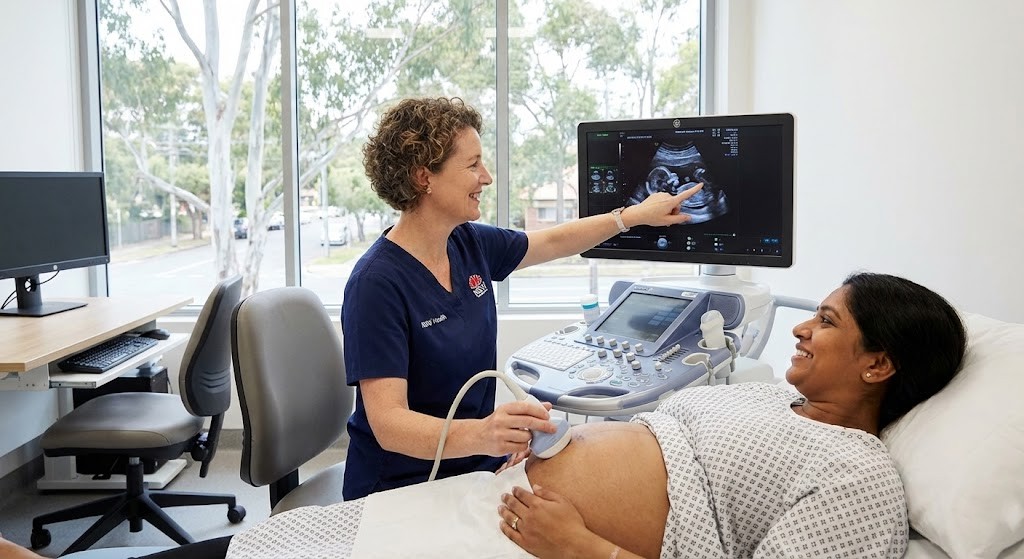
Australian midwives earn $70,000-$78,000 AUD as graduates up to $120,000-$150,000 AUD as Clinical Midwife Consultants, with Victoria’s 2024-2028 agreement delivering 28.4% compounded increases.
Victoria’s 2024-2028 enterprise agreement delivers a 28.4% compounded increase by November 2027. Typical salary ranges show:
- Graduate midwives: $70,000-$78,000 AUD annually
- Mid-career: $85,000-$95,000 AUD annually
- Clinical Midwife Consultants: $120,000-$150,000 AUD annually
Superannuation ranges from 11.5% to 12.75% in Queensland, with salary packaging adding up to $11,660 tax-free income annually plus $2,650 for meals and entertainment. NSW offers a $20,000 sign-on bonus for metro/interstate midwives relocating to rural areas through September 2025.
How Do I Get Registered as a Midwife in Canada?
Canadian midwife registration varies by province. Ontario requires 60 births minimum, $2,756 annual fees, and the CMRE exam, while BC offers UBC’s 8-10 month bridging program.
Ontario’s College of Midwives (CMO) regulates over 1,000 midwives with comprehensive requirements including minimum 60 births with specific distribution. Annual registration fees total $2,756, with the Canadian Midwifery Registration Exam (CMRE) serving as the qualifying examination.
British Columbia operates the Internationally Educated Midwives Bridging Program (IEMBP) at UBC, an 8-10 month orientation offered twice yearly. Alberta requires funded positions through Primary Care Alberta before insurance approval, creating registration bottlenecks.
Ontario Regulation 188/24, effective May 3, 2024, dramatically expanded prescribing authority. Midwives gained full category prescribing for hormonal contraceptives and controlled substances authority including fentanyl, meperidine, morphine sulfate, and nalbuphine for in-hospital pain management following mandatory education completion.
Canadian compensation operates primarily through course-of-care models rather than traditional salaries. Ontario midwives earn approximately $105,000-$135,000 annually with senior levels reaching $168,935 in Toronto. BC ranges from $97,000-$130,000, Alberta $111,000-$137,000.
[Image 4: Canadian midwife providing home birth support]
AI Prompt: “Professional midwife in casual medical attire supporting woman during labor in home birth setting, calm and supportive atmosphere, medical bag and monitoring equipment nearby, natural window lighting, diverse representation, documentary-style birth photography, emphasis on community-based midwifery care”
Alt Tag: “Canadian registered midwife providing supportive care during home birth labor”
Can Registered Midwives Prescribe Medication?

Yes. Prescribing authority varies by country. UK midwives administer controlled drugs under exemptions, Australian midwives need endorsement for Schedule 2-8 medicines, and Canadian midwives gained expanded authority in 2024.
Prescribing authority varies significantly by jurisdiction and represents a critical career consideration. UK midwives hold exemptions enabling administration of controlled drugs (Schedule 2) including diamorphine, morphine, and pethidine without prescription. The V300 qualification enables full independent prescribing.
Australian endorsed midwives can prescribe Schedule 2, 3, 4, and 8 medicines after completing 5,000 hours of clinical practice and an approved program. This endorsement is held by only 4.1% of registered midwives nationally, making it a valuable specialization.
Canadian prescribing expanded significantly in 2024. Ontario midwives gained authority for hormonal contraceptives (oral, patch, ring, IUD, implant), controlled substances for hospital-based pain management, and misoprostol for labour inductions and early pregnancy loss. British Columbia maintains principle-based standards requiring specialized certifications for augmentation, contraceptive therapy, and epidural maintenance.
Can I Work in Dubai as a Western-Trained Midwife?
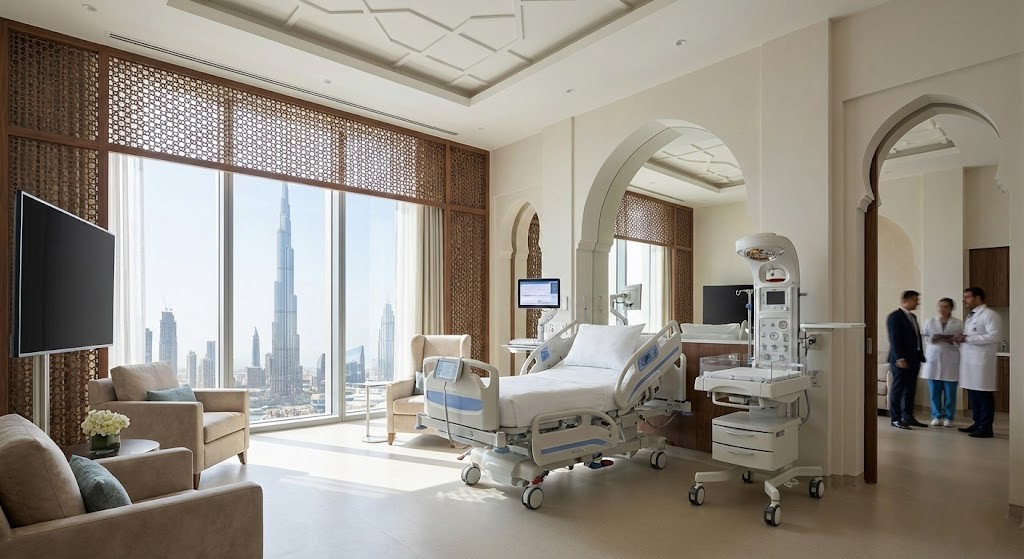
Yes. UK, Australia, Canada, and New Zealand midwives with active licenses and under 2-year practice gaps are exempt from DHA exams. Total cost is AED 2,000-2,500 with 4-6 week processing.
The Dubai Health Authority (DHA) offers a significant advantage: Western-trained midwives from UK, Australia, Canada, and New Zealand are eligible for Prometric exam exemption provided they hold valid active licenses from recognized regulatory bodies, current Good Standing Certificates, and no practice gap exceeding 2 years.
The registration process flows through the Sheryan portal with DataFlow Primary Source Verification verifying credentials over 3-4 weeks standard (2 weeks express for additional AED 500). For those requiring examination, the Prometric CBT comprises 150 multiple-choice questions over 165 minutes with a 50-60% pass score.
Practice gap restrictions carry significant consequences: gaps of 0-2 years receive full exam exemption, while 2-3 year gaps require 20 CME credits plus 4 months clinical training. Gaps exceeding 5 years trigger additional DHA assessment requirements.
Complete fee breakdown totals approximately AED 2,795-3,510 (~USD 760-955): DataFlow PSV AED 935-1,500, Prometric exam AED 660-810 (if required), application AED 200, and 1-year license activation AED 1,000. The fast-track pathway for exam-exempt candidates typically costs AED 2,000-2,500 with a 4-6 week timeline.
What Is the Salary Difference Between UK and GCC Midwives?
GCC midwives earn 2-3 times UK net income. UAE midwives receive AED 20,000-30,000 monthly (AED 240,000-360,000 annually tax-free) versus UK Band 6 net of £28,000-33,500, plus free accommodation and flights.
The tax-free nature of GCC employment transforms salary comparisons. UAE midwives earn AED 20,000-30,000 monthly depending on experience level, translating to AED 240,000-360,000 annually (~£51,000-76,000 tax-free). This compares to UK Band 6 net take-home of approximately £28,000-33,500 after tax, National Insurance, and pension contributions, representing 2-3 times the UK net income.
Saudi Arabia salaries range from SAR 7,280-22,000 monthly with comprehensive benefits: 45-61 days paid leave, free furnished accommodation, annual return flights, comprehensive healthcare, and end-of-service gratuity. Qatar Registered Midwife salaries average QAR 12,000/month with ranges of QAR 6,975-16,250.
When housing allowances (saving £800-2,000/month equivalent), annual flights, and tax savings are factored, GCC midwives can save substantially more than their Western counterparts while gaining international experience.
Do I Need Exams to Work in Saudi Arabia or Qatar?
Yes. Unlike Dubai, both Saudi Arabia and Qatar require all nursing and midwifery professionals to pass licensing examinations regardless of home country qualification or experience level.
The Saudi Commission for Health Specialties (SCFHS) classifies professionals by education level: Specialist (bachelor’s degree), Senior Specialist (master’s), and Consultant (PhD). UK, Australia, Canada, and NZ qualifications fall under Group 1, requiring only 3 years post-certification experience for Consultant classification. Complete SCFHS licensing details cover the full registration pathway.
Unlike DHA, SCFHS does not provide automatic exam exemptions: all nursing and midwifery professionals must pass the Saudi Nursing Licensure Examination (SNLE). The exam comprises 200 multiple-choice questions over 4 hours 30 minutes with a pass score of 500 out of 800 (approximately 62.5%). Total registration costs reach SAR 3,200-4,500 (~USD 850-1,200) with timelines of 3-6 months minimum.
Qatar’s Department of Healthcare Professions requires 3 years of clinical experience as a Registered Midwife after registration. The Prometric examination comprises 150 multiple-choice questions over 3 hours with a 50% pass score, notably lower than SCFHS’s 62.5% requirement.
Total costs reach QAR 2,670-3,000 (~USD 730-820) with 2-4 month timelines. Review the complete QCHP licensing guide for detailed application steps.
What Is the Career Path for a Registered Midwife?
UK midwives advance from Band 5 newly qualified to Band 6 within 2-3 years, then to Consultant Midwife roles (Band 8b-8c, £64,455-£88,682) requiring master’s degree and 5-7+ years experience.
The UK NHS provides structured advancement from Band 5 newly qualified through Band 9 director level. Most midwives advance from Band 5 to Band 6 within 2-3 years of clinical practice. Consultant Midwife roles (Bands 8b-8c, £64,455-£88,682) require minimum master’s degree, 5-7+ years experience, and achievement across four pillars: expert clinical practice, leadership, research, and education.
Clinical specialization opportunities include fetal medicine (high-risk pregnancy collaboration), ultrasound sonography (growing demand for screening), IBCLC lactation consultancy, perinatal mental health (rapidly expanding post-NHS prioritization), and neonatal/transitional care pathways.
Management progression leads through Head of Midwifery (Band 8b-8c) to Director of Midwifery (Band 8d-9, £91,342-£125,637) with board-level accountability. Academic pathways include clinical-academic PhD routes through NIHR funding and university lectureships requiring MSc minimum.
Frequently Asked Questions
Can registered midwives prescribe medication?
Yes, but authority varies by country. UK midwives prescribe controlled drugs under exemptions, Australian endorsed midwives prescribe Schedule 2-8 medicines after 5,000 hours, and Canadian midwives prescribe contraceptives and controlled substances as of 2024.
Yes, prescribing authority varies by country. UK midwives prescribe within their scope under exemptions, including controlled drugs like morphine. Australian endorsed midwives prescribe Schedule 2, 3, 4, and 8 medicines after completing 5,000 hours of practice and an approved program. Canadian midwives in Ontario gained full hormonal contraceptive prescribing authority in May 2024, plus controlled substances for hospital-based pain management.
What’s the salary difference between UK and GCC for registered midwives?
GCC midwives earn 2-3 times UK net income. UAE midwives receive AED 20,000-30,000 monthly (AED 240,000-360,000 annually tax-free) versus UK Band 6 net of £28,000-33,500, with free accommodation and flights adding £12,000-24,000 annual value.
UK Band 6 midwives net approximately £28,000-£33,500 annually after tax and deductions. UAE midwives earn AED 20,000-30,000 monthly depending on experience (AED 240,000-360,000 annually, ~£51,000-76,000 tax-free), representing 2-3 times UK net income.
Saudi Arabia provides SAR 7,280-22,000 monthly plus 45-61 days paid leave, free accommodation, annual flights, and end-of-service gratuity. When housing savings (£800-2,000/month equivalent) and tax benefits are included, GCC packages significantly exceed Western take-home pay.
Do I need to retake exams to work in Dubai as a UK-registered midwife?
No. UK-registered midwives with valid NMC licenses and practice gaps under 2 years are typically exempt from DHA Prometric exams, requiring only DataFlow verification (3-4 weeks, AED 935-1,500) and DHA registration.
UK-registered midwives with valid NMC licenses and no practice gap exceeding 2 years are typically exempt from DHA Prometric exams. You still require DataFlow primary source verification (3-4 weeks, AED 935-1,500) and DHA registration.
The complete fast-track pathway costs AED 2,000-2,500 with 4-6 week timelines. Practice gaps of 2-3 years require 20 CME credits plus 4 months clinical training instead of full exam exemption.
How long does DHA licensing take for Western-trained midwives?
The complete DHA licensing process takes 4-6 weeks for exam-exempt midwives with no practice gaps. DataFlow verification requires 3-4 weeks, DHA review takes 1-2 weeks, with total costs of AED 2,000-2,500.
The complete DHA licensing process typically takes 4-6 weeks for exam-exempt Western-trained midwives with no practice gaps. DataFlow verification requires 3-4 weeks (2 weeks express for additional AED 500). DHA application review takes 1-2 weeks after receiving DataFlow results.
Total costs range AED 2,000-2,500 for fast-track pathways. Those requiring Prometric exams should allow 6-10 weeks total timeline.
What’s required to become a registered midwife in Australia from the UK?
UK-trained midwives apply through NMBA’s outcomes-based assessment requiring $640 AUD fee, IELTS 7.0, primary source verification, orientation modules, MCQ exam (NZD $165), OSCE ($1,750 AUD), and 450 hours recency in 5 years, processing in 33 days average.
UK-trained midwives apply through NMBA’s outcomes-based assessment pathway, requiring $640 AUD non-refundable assessment fee, English proficiency demonstration (IELTS 7.0 in all components or equivalent), primary source verification, orientation modules, portfolio submission, MCQ exam (NZD $165), and OSCE (approximately $1,750 AUD). Processing times average 33 days for complete applications. Recency of practice requirements mandate 450 hours minimum in the preceding 5 years.
Conclusion
Western-trained registered midwives possess qualifications commanding premium value in the GCC healthcare marketplace, with tax-free earnings potential of 2-3 times domestic net income through comprehensive benefits packages. The licensing pathway varies by destination: Dubai offers exam exemptions for those with active registration and no practice gaps exceeding 2 years, while Saudi Arabia and Qatar require examination regardless of home country qualification.
Critical success factors include maintaining continuous practice without gaps exceeding 2 years, keeping home country registration active during GCC employment, obtaining Good Standing Certificates early in the application process, and budgeting USD 760-1,200 total for licensing fees. Timeline planning should allow 2-6 months for complete licensing.
For midwives seeking international career advancement, the GCC represents a strategic opportunity combining financial growth, professional development, and contribution to the region’s healthcare excellence. Contact First Medical Consultancy for expert guidance on DHA, SCFHS, or QCHP registration pathways tailored to your qualifications and career goals.